

Transit disruptions can occur for many reasons—from planned maintenance to unexpected events such as severe weather or emergencies. Scroll down for Tips for Navigating Disruptions and Frequently Asked Questions to keep moving confidently when disruptions occur.
Tips For Navigating Disruptions
 Get Real-Time Service Alerts
You can stay informed about service updates through multiple channels:
- Service Alerts: Check for the latest system-wide updates and planned disruptions.
- Text and email notifications: Sign up to receive updates to your phone or inbox.
- Social Media: For up-to-the-minute updates and rider alerts, follow MTA Maryland on:
 Twitter MTA Maryland (@mtamaryland) on X
 Bluesky Social MTA Maryland Service Alerts (@mtamarylandalerts.bsky.social)
- Transit app: For real-time alerts and vehicle tracking information.
- Listen for announcements and check station signs for updates.
 Check Your Transit Plan
If service on your route is disrupted, check the Transit trip planning app for nearby alternative routes to your destination. MTA riders automatically receive the Transit Royale subscription at no cost. This upgrade unlocks enhanced trip-planning features, helping you find the next-best way to your destination with ease.
 Use CharmPass for Travel Flexibility
If service is disrupted on your usual transit route, and another route or mode can help you get to your destination, there’s no need to pay another fare if you’re using CharmPass, the official mobile ticketing app for MTA. With CharmPass, your one-way fare for local buses, Metro Subway, and Light Rail gives you 120 minutes of FREE transfers across all MTA core services. Simply show your activated CharmPass to the bus operator, fare inspector, or station agent on any bus, light rail, or metro service.
 Look for Free Shuttle Buses
When planned work or unexpected emergencies temporarily close rail stations, the MTA provides free shuttle bus service between affected stations to keep you moving. Shuttle buses are typically used during:
- Major Planned Work: Scheduled closures, such as weekend testing or multi-day track replacement.
- Prolonged Emergencies: Critical, unforeseen events that disrupt regular rail service, such as fires, accidents, or significant infrastructure damage near transit routes.
What You Should Know
- Shuttle buses are always free to use.
- Allow extra travel time—buses may take longer to navigate routes than trains.
- Most shuttle buses stop at all closed stations during a disruption; however, the MTA may also deploy express shuttles that bypass some stops to speed up travel.
- Check the Light Rail & Metro Subway Shuttle Bus Stops page for stop locations
- The MTA notifies riders of shuttle bus service via station signage and platform announcements, social media, text and email alerts, the Service Alerts page, and updates in the Transit app.
- Check station signs for the shuttle bus boarding area. Look for Transit Ambassadors at key stations. They can help guide you to shuttle bus boarding areas.
 Still Need Help? Call Us.
For additional information or help with alternative transit options, riders can call the Transit Information Center at 410-539-5000 from 6 a.m. to 7 p.m. Monday–Friday.
Frequently Asked Questions
A range of factors can delay or disrupt transit service, including:
- Planned Work: Scheduled disruptions for essential maintenance and system upgrades—like track work or signal testing—that let crews complete complex projects faster and more safely than working during active service hours.
- Unplanned Events: Factors entirely outside the transit system’s control.
- Major Community Events: Large gatherings—such as parades, festivals and large-scale events—can affect service by requiring bus reroutes or additional service to accommodate crowds.
- Severe Weather & Conditions: Snow, ice, and heavy rain can cause debris, flooding, and downed power lines. Extreme heat can create “sun kinks” in rail tracks, requiring trains to slow down for passenger and crew safety.
Not necessarily! Sometimes a bus or train may pause briefly at a stop or station—even when everything is running smoothly. If your vehicle is ahead of schedule, operators may wait a moment to make sure it stays on time and reaches later stops when riders at those stops expect it to arrive. This helps keep the entire route running smoothly and ensures reliable service for everyone.
Winter Weather
When winter weather requires broader route changes, the MTA adjusts bus service in phases. Service cuts begin with Phase 1 routes and progress through Phase 3 (major) routes. When conditions improve, service returns in reverse order: Phase 3 routes first, then Phase 2, and finally Phase 1.
| Phase | Routes |
|---|---|
| Phase 1 | 38, 57, 75, 80, 92, 103, 105, 115, 120, 150, 154, 160, 163 |
| Phase 2 | 21, 22, 26, 28, 31, 33, 34, 36, 37, 52, 59, 62, 63, 65, 69, 70, 71, 73, 82, 83, 87, 89, 93, 94, 95 |
| Phase 3 | 29, 30, 53, 54, 56, 67, 76, 77, 78, 79, 81, 85, 91, BLUE (BL), BROWN (BR), GOLD (GD), GREEN (GR), LIME (LM), NAVY (NV), ORANGE (OR), PINK (PK), PURPLE (PR), RED (RD), SILVER (SV), YELLOW (YW) |
Extreme Heat
When outdoor temperatures rise, it may become necessary to slow trains down for safety. Although slower speeds can slightly extend travel times, this precaution helps prevent much larger service outages and ensures continued safe operation.
Different agencies issue heat orders depending on who owns and manages each rail line:
- Light Rail and Metro Subway: When rail temperatures reach 130 degrees, MTA issues heat orders requiring trains to travel at a maximum speed of 40 miles per hour (mph). If rail temperatures continue to increase, MTA may reduce train speeds further until the rail temperature drops below 130 degrees.
- MARC Brunswick and Camden Lines: When outdoor air temperatures reach a consistent 85 degrees or greater, or there is a 25-degree swing in temperatures (warmer or colder) within a 24-hour period, CSX issues heat orders requiring MARC trains to operate up to 20 mph slower than normal, but not below 40 mph.
- MARC Penn Line: When outdoor air temperatures reach 90–100 degrees, Amtrak issues heat orders on the Penn Line that relate primarily to the overhead electric wires that power trains.
 Did You Know? Why Trains Slow Down in Extreme Heat
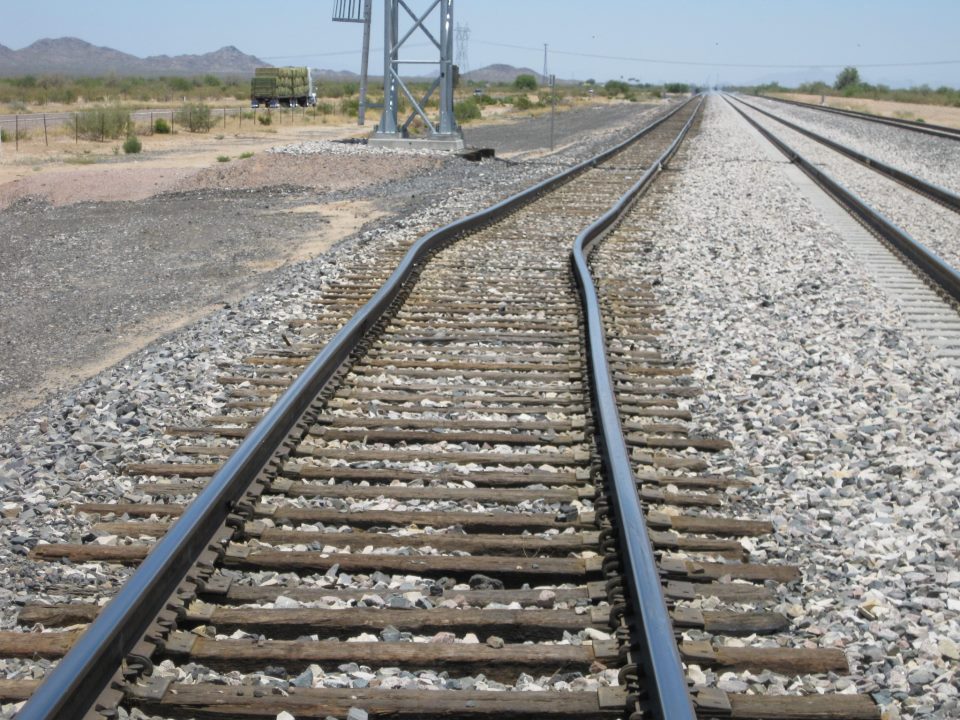
When temperatures rise, metal components in the rail system naturally expand. This can cause steel tracks to bend or buckle, creating a condition known as a “sun kink.” High heat can also cause overhead electric wires that power trains to expand and sag. If a train moves too quickly beneath sagging wires, its pantograph (the arm on top of the train that draws power) could snag the cables, pulling them down and causing major service disruptions and costly repairs.
The Solution: Heat Orders
To keep everyone safe, trains may operate under formal Heat Orders during periods of extreme heat.
These are official directives requiring train operators to reduce speed so they can:
- Watch for track or wire issues, such as sun kinks or sagging lines.
- Stop safely if a defect is spotted ahead.
All Heat Orders follow federal safety standards set by the Federal Transit Administration (FTA) and the Federal Railroad Administration (FRA).
The MTA does not own or maintain bus stops or the sidewalks leading up to them. Snow removal from sidewalks and the area directly around a bus stop is the responsibility of either the local jurisdiction (city/county) or the adjacent property owner.
For more information on snow clearing, please contact the appropriate local government using the information below.
- Baltimore City Snow Center provides helpful information on snow removal, including locations of Salt Boxes in neighborhoods throughout the city.
 Snow Removal | Anne Arundel County
 Snow Removal Sites | Baltimore County
- Snow Removal | Howard County
No. If the morning service does not operate, then the afternoon service will not operate. In the event that adverse weather conditions necessitate a change or deviation in the morning schedule, announcements will be made on radio stations WBAL (1090 AM Baltimore), WMAL (630 AM Washington), and WSMD (98.3 Star FM). To stay informed, always check the MTA Service Alerts page before traveling.
Yes, with adequate notice. The MTA may modify Commuter Bus service if the U.S. Office of Personnel Management (OPM) approves an early release of federal employees. The MTA will assess whether buses can operate on a revised schedule.
Yes. During planned road closures in Washington, DC, MTA Commuter service may be rerouted to outlying WMATA Metro stations. Buses will drop off and pick up passengers at these alternative locations instead of their usual stops.
| Route Numbers | Alternative WMATA Metro Station | Boarding/Drop-Off Location |
|---|---|---|
| 220, 230, 240, 250, 260 | Morgan Blvd | Bus Bays A, B, F, G, and H |
| 305, 315, 325 | Silver Spring | Main Bus Loop |
| 335, 345 | Greenbelt | Main Bus Loop |
| 610–650, 705–725 | Branch Avenue | HOV Parking Lot |
| 735, 810–850 | Suitland | Bus Bays C, D, and H |
Because conditions can change quickly, please check Service Alerts before you travel for the most current information.
The majority of planned trackwork is completed overnight when trains aren't running. This allows work crews to safely perform routine, essential maintenance on tracks, signals, power systems, and other critical infrastructure, keeping service safe and reliable. While crews aim to minimize impacts, major projects such as signal upgrades or track replacement may require daytime work because overnight windows are too short. This approach ensures safety, reduces total project time, and lowers costs.
Emergency repairs may also require a daytime disruption. When issues pose an immediate safety risk, crews are dispatched immediately. This includes repairing broken rails, fixing urgent signal or power failures, and moving disabled trains back to a yard for repairs.
Single-tracking is a temporary procedure in which trains traveling in both directions share a single track while the adjacent track is closed. This allows crews to safely perform maintenance, construction, or emergency repairs without completely stopping train service.
Single-tracking helps keep service running, but may cause slower travel times or brief delays. MTA crews and dispatchers work closely to minimize disruptions and keep trains moving safely.
What Riders Can Expect
When single-tracking is in effect, train movement is carefully coordinated to keep everyone safe:
- Metro Subway: You can remain on the same platform to board trains during single-tracking, as all stations use center platforms.
- Light Rail: Because Light Rail stations use both center and side platforms, you may need to board from the opposite platform. Always look both ways and use only designated crossings to reach the other side.
Speed restrictions are sometimes necessary to ensure the safety of our passengers, crew, and infrastructure. We may reduce train speeds during extreme weather conditions—such as high heat, ice, snow, or heavy leaf fall—or when emergency personnel and maintenance crews are working on tracks.
Yes. Your MARC ticket is cross-honored between same-fare zone stations on the Penn and Camden Lines at all times.
| Camden Line | Equals | Penn Line |
|---|---|---|
| Washington Union Station | = | Washington Union Station |
| Riverdale Park Town Center, College Park, Greenbelt | = | New Carrollton, Seabrook |
| Muirkirk, Laurel, Laurel Racetrack, Savage, Jessup | = | Bowie State, Odenton |
| Dorsey, St. Denis | = | BWI Airport, Halethorpe |
| Baltimore-Camden | = | West Baltimore, Baltimore-Penn |